 WP Duet
When a client calls to say their site is down, the cause is usually one of three things: the site stopped answering, the SSL certificate expired, or the domain did. All three are easy to catch early, and all three are embarrassing to hear about from the client.
Uptime checks
An uptime check visits the site on a schedule and records whether it answered, how quickly, and with what status. If it fails, you get an alert.
A few things make uptime alerts more useful:
- Check often enough. Every one to five minutes for sites that take payments, less often for brochure sites.
- Keep the history. A single 11-minute outage is noise. Three a week is a problem with the host worth raising.
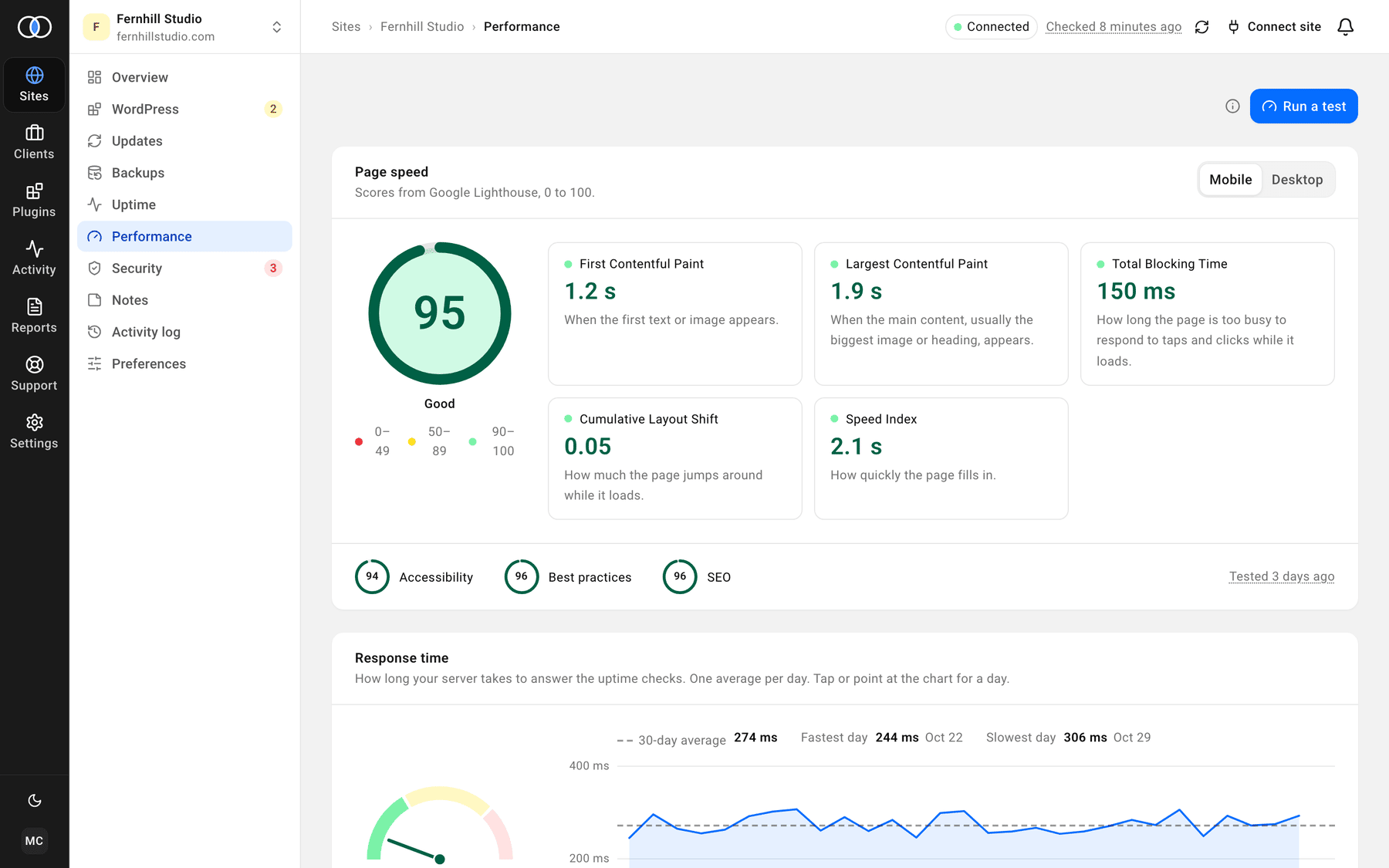
- Watch response time, not just up or down. A site that slowly gets slower is often heading for an outage.
SSL certificate expiry
Most certificates now renew automatically, which is exactly why expiry catches people out. Renewal quietly fails when a domain moves to new DNS, a CDN is added, or a host changes how it issues certificates. The first sign is a full-page browser warning that tells visitors the site isn’t safe.
Get a warning at least two weeks before any certificate expires. If it hasn’t renewed by then, something is stopping it, and you have time to find out what.
Domain expiry
Domains are often registered by the client, years ago, on a personal account with a card that has since expired. When the renewal fails, the site and the email go with it.
A warning 30 days ahead gives you time to contact the client and get it renewed. It’s also a good moment to suggest moving the domain to an account the business, not one person, controls.
Send alerts where someone will see them
An alert nobody reads is the same as no alert. A few rules help:
- Send outages to a shared place, such as a team Slack channel, not one person’s inbox.
- Keep expiry warnings in email, where they can be forwarded to the client.
- Agree who looks at alerts out of hours, and what counts as worth a call.
In WP Duet
WP Duet checks uptime every 5 minutes by default, and as often as every minute. It keeps incident history and response times, and warns you before an SSL certificate or domain expires. Alerts go to email and Slack.
Two limits worth knowing: checks run from one region today, and there are no SMS or phone alerts. More on the monitoring page.